

PPF vs Ceramic Coating: Which Paint Protection Is Right for Your Vehicle?
Keeping factory automotive paint immaculate in the Midlands takes more than an occasional wash. Between flying gravel on Interstate 20, seasonal pine pollen, and severe summer UV radiation, standard clear coat finishes suffer constant chemical and mechanical degradation.
Vehicle owners evaluating automotive paint protection usually consider two primary options: Paint Protection Film (PPF) and Ceramic Coatings. While marketing claims often group these products together under general “surface protection,” they utilize completely different materials, offer unique defensive mechanisms, and solve distinct paint preservation issues.
Evaluating the structural differences between PPF vs ceramic coating allows you to choose the exact level of protection required for your vehicle’s specific driving conditions and long-term storage environment.
What Is Paint Protection Film (PPF)?
Paint Protection Film often referred to as a clear bra is a thick, high-impact thermoplastic polyurethane (TPU) membrane installed directly over painted surfaces. Measuring approximately 8.0 mils thick, modern PPF serves as an elastomeric armor.
The core advantage of high-grade PPF lies in physical shock absorption and elastomeric properties.
- Impact Resistance: Thick polyurethane material disperses kinetic energy from high-velocity rock chips, gravel, road debris, and physical parking scrapes before the force reaches the underlying paint.
- Thermal Self-Healing: Premium films feature a specialized acrylic polymer top coat. When exposed to environmental heat—such as direct sunlight or hot water the polymer chains return to their original relaxed state, dissipating fine swirl marks and light scratches automatically.
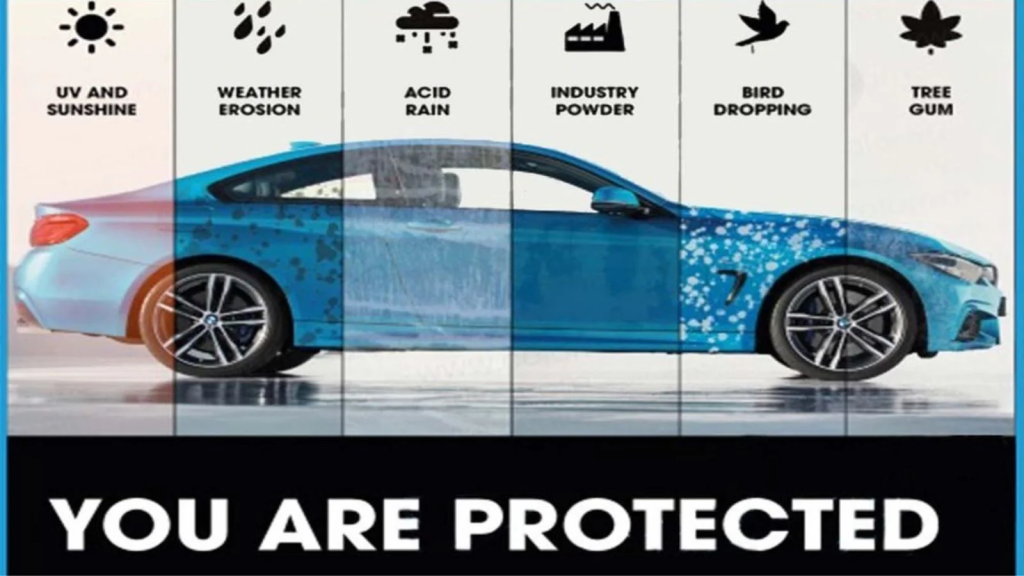
- Chemical & UV Barrier: The membrane blocks harsh UV rays from oxidizing factory paint and prevents acidic contaminants (such as bird droppings and insect splatter) from etching into the clear coat.
What Is a Ceramic Coating?
A ceramic coating is a liquid polymer utilizing silicon dioxide or silicon carbide nano-technology. When applied to clean vehicle surfaces, the liquid fills microscopic pores in the factory clear coat and chemically bonds to form a rigid, glass-like hydrophobic shell.
Unlike film layers, ceramic coatings do not add measurable physical thickness (typically registering under 1 to 2 microns). Instead, coatings transform the surface properties of the paint:
- Extreme Hydrophobicity: Creates a high water contact angle, causing water, mud, and grime to bead up and slide off easily.
- Slickness and High Gloss: Deepens color depth, mirror reflection, and paint clarity while minimizing surface tension.
- Chemical Resistance: Protects against aggressive chemical stains, bird lime, tree sap, and road salt oxidation across a wide pH range.
Key Distinction: Ceramic coatings modify surface tension and chemical resilience; they do not possess the structural mass or elasticity required to stop flying rocks or deep key scratches.
PPF vs Ceramic Coating: Direct Feature Comparison
Understanding the technical boundaries of each solution simplifies selecting the correct application.
| Feature / Benefit | Paint Protection Film (PPF) | Ceramic Coating |
| Primary Function | Impact absorption & mechanical shielding | Chemical isolation & water shedding |
| Material Thickness | ~8.0 mils (200+ microns) | ~1 to 2 microns |
| Rock Chip Protection | High (Absorbs debris impacts) | None (Fails under solid impact) |
| Scratch Healing | Yes (Self-heals with heat) | No (Scratches require paint correction) |
| Hydrophobic Effect | Moderate to High (Integrated top coats) | Extreme (Self-cleaning qualities) |
| Gloss Level | Factory Match / High-Gloss or Stealth Matte | Exceptional Glass-Like Reflection |
| Typical Longevity | 7 – 10+ Years (Manufacturer Warranty) | 2 – 5 Years |
Which Protection Option Do You Need?
Choose Paint Protection Film If:
- You frequently drive on highways (such as I-20 or I-26) where loose gravel, construction debris, and rock chips are common hazards.
- You own a performance car, luxury SUV, or new vehicle with pristine factory paint that you want to preserve in original condition.
- You want high-risk front impact zones including front bumpers, hoods, fenders, side mirrors, and headlights safeguarded from impact rash.
Choose a Ceramic Coating If:
- Your primary goal is easy washing, surface slickness, and maximum visual gloss.
- The vehicle is primarily parked in a garage or driven in low-impact city environment settings.
- You want chemical stain and UV protection across the entire body, including non-filmed exterior panels, glass, and wheels.
The Ultimate Solution: Combining PPF and Ceramic Coatings
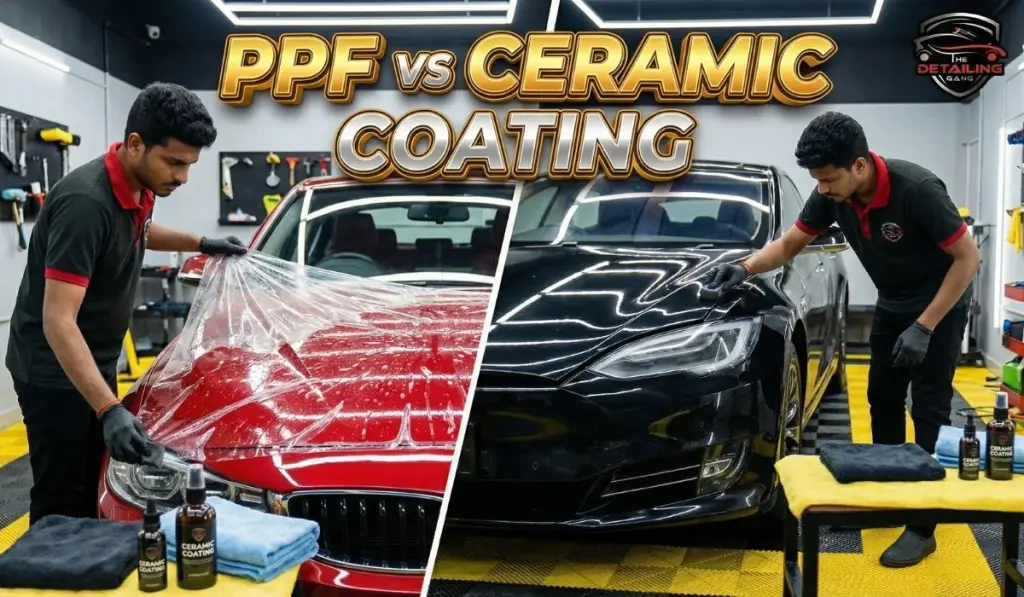
You do not have to limit protection to one product over the other. The standard among automotive preservation experts is applying PPF on high-impact front zones (or full-body coverage) and overlaying the entire vehicle including the film with a ceramic coating top coat.
This combined approach yields maximum kinetic impact absorption from the underlying polyurethane film while benefiting from the extreme water beading and effortless maintenance of the hydrophobic ceramic layer. To review independent technical analysis on polymer performance standards, consult material science resources at the National Institute of Standards and Technology (NIST).